
What We Can Learn from Allyson Friedman: When Talking About Race Goes Horribly Wrong
When a parent thought she was explaining racism to her child during a school Zoom call, what came out instead was contempt. The Allyson Friedman incident offers a deeper lesson about how careless explanations shape what our children learn about intelligence, belonging, and history.
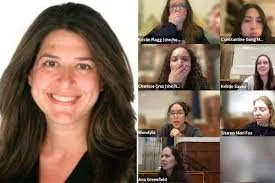
Allyson Friedman, Hunter College professor, alongside a screenshot of the shocked reactions of people who heard her “explanation” on the call.
Image from Facebook
I often shy away from calling all but the most egregious transgressors “racist” because calling someone racist not only shuts down conversation about what can we learn from this event but it also stunts the growth of us onlookers because surely WE are NOT RACIST and would never make the same mistake that person made, so we have nothing to learn.
This brings me to Allyson Friedman, the Hunter College professor who made some remarks over a group Zoom call that landed her in very hot water. Normally I don’t click on every article about someone saying something racist because I find it adds unnecessary weight to my day, but my dad went to Hunter College, so I dove in.
It’s taken me a long time to write about Allyson because I am trying to believe her reasons for saying the extremely hurtful and racist things she said and I am trying to interrogate whether someone who claims not to be racist can say such racist things without actually harboring malice.
Is it possible for someone who claims not to be racist to say racist things without harboring malice?
Here’s what I’ve come up with: Allyson is not rare. She is common. Allyson is a whole lot of people who do not mean to cause harm, but cause harm anyway because they are tired; they are skimming; they are not paying adequate attention to the words that are coming out of their mouths when they are talking to their kids.
And before you think I am throwing Allyson under the bus, know that I am often tired; I am sometimes lazy, but when I talk to my kids about race, I always try to be deliberate because the cycle of mindless racism stops with me.
For those who have blissfully missed this news story since it was wedged between the end of the Olympics and the start of a new war with Iran, here’s the synopsis:
Allyson, in her role as mom, was dialed in to a public school district zoom call in Manhattan. It being Black History Month, the call began with interim acting superintendent Reginald Higgins referencing scholar and creator of Black History Month, Carter G. Woodson, Higgins mentioned Woodson’s observation that the evil of racial oppression is how it infiltrates the mind of the oppressed:
"When you can control a man's thinking, you do not have to send him to the back door, he will go without being told."
A Black eighth grader was speaking against a school closing and Allyson could be heard saying to her child, "They're just too dumb to know they're in a bad school. ... Apparently Martin Luther King said it. Like if you train a Black person well enough, they'll know to use the back, you don't have to tell them anymore."
Oh Allyson. What frustrates me most is not that she said something racist. It’s that she thought she was explaining something. She misattributed Woodson’s quote to Martin Luther King, Jr. She flattened a complex idea about how oppression operates into an insult about intelligence. She took a moment that could have deepened understanding and turned it into contempt
Number 1. Allyson didn’t listen. Talking to your kids about race doesn’t need to be an extremely heavy lift, but it does require some care and attention. There are more historical Black intellectual leaders than Martin Luther King, Jr. If someone is speaking about Black thought during Black History Month, the least we can do is listen carefully enough to get the name right.
Importantly, Woodson’s quote does not mention race at all. It describes how systems of oppression work — how power shapes thinking. Turning that into “they’re too dumb” reveals more about the speaker’s assumptions than about the author of the quote itself.
Listening is not passive. It is discipline.
Number 2. Allyson didn’t think about how her words would land. When you talk about race with kids you don’t have to be an expert, but you do need to approach the conversation with empathy and curiosity. How will your kids hear what you are saying? How will they interpret it? Do you want your kids to tell their friends on the playground or their teacher during class what you said?
Careless language becomes inherited language.
Number 3. Allyson skipped over the most interesting part of Woodson’s quote: “When you control a man’s thinking…” Now that’s the conversation starter right there.
Here are some great questions to discuss with your kids:
How do you control a man’s thinking?
How do systems convince people they are inferior?
How does a society shape what people believe about themselves?
How does history linger in the present?
Instead of asking those questions, she reached for a stereotype.
This is the kind of harm that doesn’t come from white hoods. It comes from unexamined assumptions whispered in kitchens. It comes from thinking we understand something deeply when we’ve only skimmed the surface.
Allyson had an opportunity to model curiosity. She had an opportunity to humanize a child who was bravely speaking up. She had an opportunity to demonstrate what it looks like to wrestle honestly with history. Instead, she modeled dismissal.
I’m giving Allyson the benefit of the doubt there, so I’ll wager she has one of those tshirts that says “In a world where you can be anything, be kind.” She might even have one of those “In this house….” signs or even, dare I say it, a Black Lives Matter sign! But we do not get to claim empathy as an identity. We practice empathy as a discipline.
So what can we learn from Allyson Friedman?
→ Listen carefully.
→ Slow down.
→ Ground yourself in empathy and curiosity before you explain.
→ Do not improvise from stereotypes.
And if you are tired, say you’re tired. But don’t let your exhaustion excuse harm. Because the real issue was not the unmuted microphone. It was the unexamined thought.
I don’t pretend to know what’s in Allyson’s heart, but I do know this: impact matters more than intention. Our children are always listening. They are forming beliefs about who is smart, who is worthy, who belongs.
If we are going to interrupt racism, it will not be through slogans or yard signs. It will happen in the quiet moments — when we slow down, listen carefully, and choose our words with discipline.
The cycle of mindless racism does not stop with outrage. It stops with attention. If we are serious about raising kids who think critically and love boldly, we must practice the discipline of listening before explaining.
That’s the work.